What are Flashes and Floaters
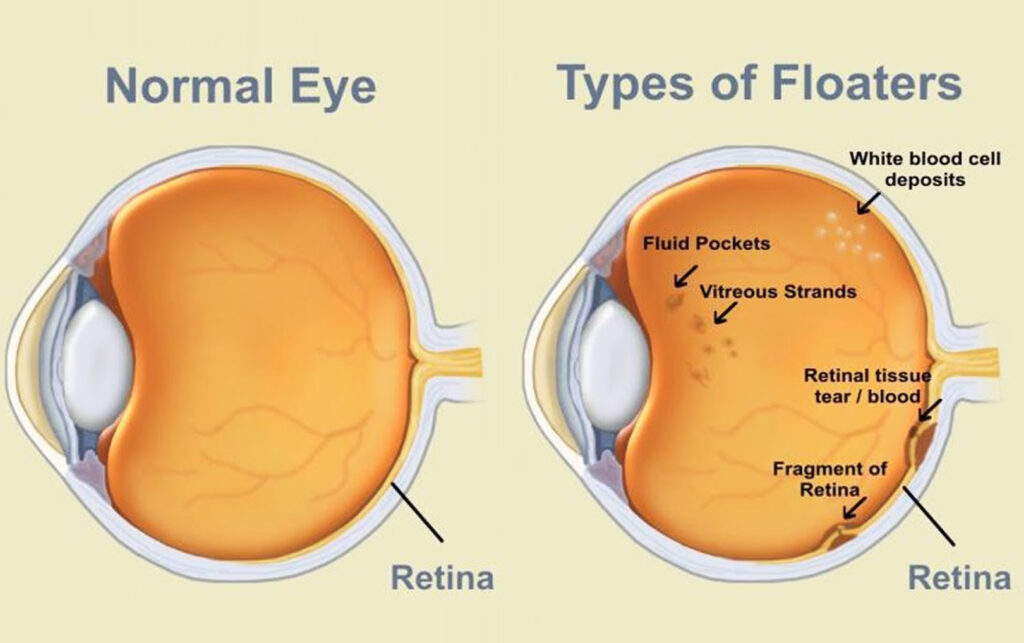
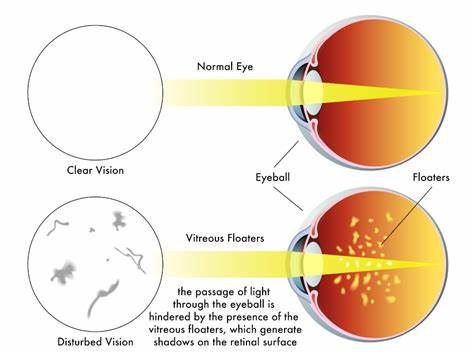
For a lot of people Floaters and flashes are a very common sight. The floater can be considered as a catchall term for the specks, threads, or cobweb-like images that occasionally drift across the line of vision. Floaters are actually very tiny clumps of gel or cells inside the vitreous that fills our eye. What we see are the shadows these clumps that are being cast on our retina.
Though these objects seem like they are in front of our eye, they are actually floating inside of it.
Flashes refer to the occasional flashes of light observed in the corner of our vision, most often on extreme gaze.
What are the symptoms?
Floaters have the following features:
- They can be of varying shapes and sizes and look like black dots, shadows, hairs or cobwebs.
- They’re more prominent against pale and light backgrounds, especially in sunlight.
- They can move when your eye moves and dart away when you look at them.
Flashes have the following features:
- They can look like small sparkles, lightning, fireworks or streaks of light.
- Tend to be in the extreme corners of the eye.
- Last for undefined amounts of time and can randomly come and go.
- Always check one eye at a time, with the other eye covered.
Why Flashes and Floaters occur?
Floaters are more common when we reach middle age. At this time the vitreous gel starts to thicken and shrink. This further lead to the formation of clumps or strands. Sometimes the shrinking of vitreous can create tiny tears in the retina as it pulls away from the wall of the retina. If these tears bleed new floaters may appear.
With Flashes the vitreous gel is rubbing or pulling at the retina, moving it slightly from the normal position lining the back of the eye. Flashes are flashes of light that appear in our vision intermittently and may be noticeable off and on for several weeks to months.
Trauma to the eye can often cause Flashes and floaters. Migraine headaches are known to cause flashes.
Flashes and floaters can also cause by retinal detachment, serious condition the require immediate medical attention.
Warning signs of retinal detachment:
- Flashing lights
- A sudden appearance of new floaters.
- Shadow in the side or periphery of the vision.
- Grey curtain moving across the field of vision.
Though the symptoms don’t always mean you are experiencing a retinal detachment but, you should see you ophthalmologist right away.